
Why V30 / V90 Memory Cards Can Still Fail During Recording

Speed Ratings Don’t Guarantee Recording Stability
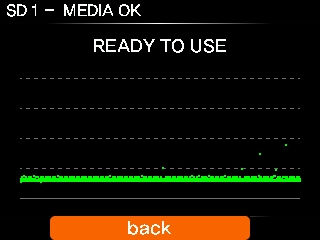
: Use OFFLOADER 16X to check memory card health before your shoot and reduce the risk of preventable recording failures.
Many users assume that memory cards rated V30 or V90 will always provide stable recording performance. However, in real-world shooting environments, recording interruptions frequently occur even on cards that meet these specifications.
This is because the Video Speed Class (V30 / V90) is defined based on the condition of a card when it is new.
As a memory card is used over time, its internal structure and behavior become increasingly complex, leading to response time degradation.
What Happens Inside an Aged Memory Card?
With long-term use, the following changes accumulate inside a memory card:
NAND Cell Aging
Repeated program/erase (P/E) cycles on the same cells
Increased ECC retry counts
Gradually longer page access times
Reduction of Over-Provisioning Space
Spare area consumed by replacing failing cells
Less effective internal free space available
Increased Fragmentation
Repeated dynamic mapping spreads data internally
Sequential access efficiency decreases
More Frequent Garbage Collection
Higher cost of separating valid and invalid data
Increased internal data movement
Reduced Folding Throughput
Slower transfer of data from SLC cache to TLC/QLC storage
SLC cache cannot be cleared in time
Rather than simply becoming “slower,” an aging memory card becomes internally more complex and less predictable.
What Is Response Time Degradation?
Response time degradation occurs when a memory card maintains acceptable average throughput, yet exhibits abnormally long latency at specific locations or moments.
In practice:
Benchmark averages appear normal
File copying seems fine
But at certain moments:
Write latency spikes
Internal retries increase
Camera buffers are exhausted
As a result, the camera concludes that the card is too slow and stops recording.
Why Do V30 / V90 Cards Still Fail?
V30 and V90 ratings guarantee minimum sustained write bandwidth.However, these guarantees assume that:
Adequate over-provisioning remains available
Garbage collection and folding operate smoothly
NAND cells are in healthy condition
Once any of these assumptions is violated due to aging, the specification no longer reflects real-world behavior.
In other words:
V30 / V90 guarantees throughput, not response time stability.
For continuous video recording, latency stability is far more critical than average speed.
Why Is This Hard to Detect Using Conventional Methods?
In typical camera or computer environments:
Internal garbage collection activity is invisible
Folding behavior cannot be observed
ECC retries and internal delays cannot be measured directly
As a result, the root cause is usually investigated only after a failure has already occurred.
Why OFFLOADER 16X Is Different
OFFLOADER’s card check function does not rely on simple read success or failure.
Instead, it:
Measures response time distribution across the entire card
Compares it against normal behavior
Statistically analyzes and visualizes degradation trends
This makes it possible to:
Identify problematic cards before errors occur
Avoid unexpected recording failures in critical shooting situations
Use OFFLOADER to evaluate memory card health in advance and protect your next shoot from preventable failures.


Comments